Breast Implants Turkey Cost 2026: Price, Types & vs UK/US
Medically reviewed by Akın İnalöz, MD, Board-Certified Plastic Surgeon· Last reviewed:
All-inclusive
Breast Augmentation
from€4,300US$4,990£3,700CA$6,920A$7,010NZ$8,510
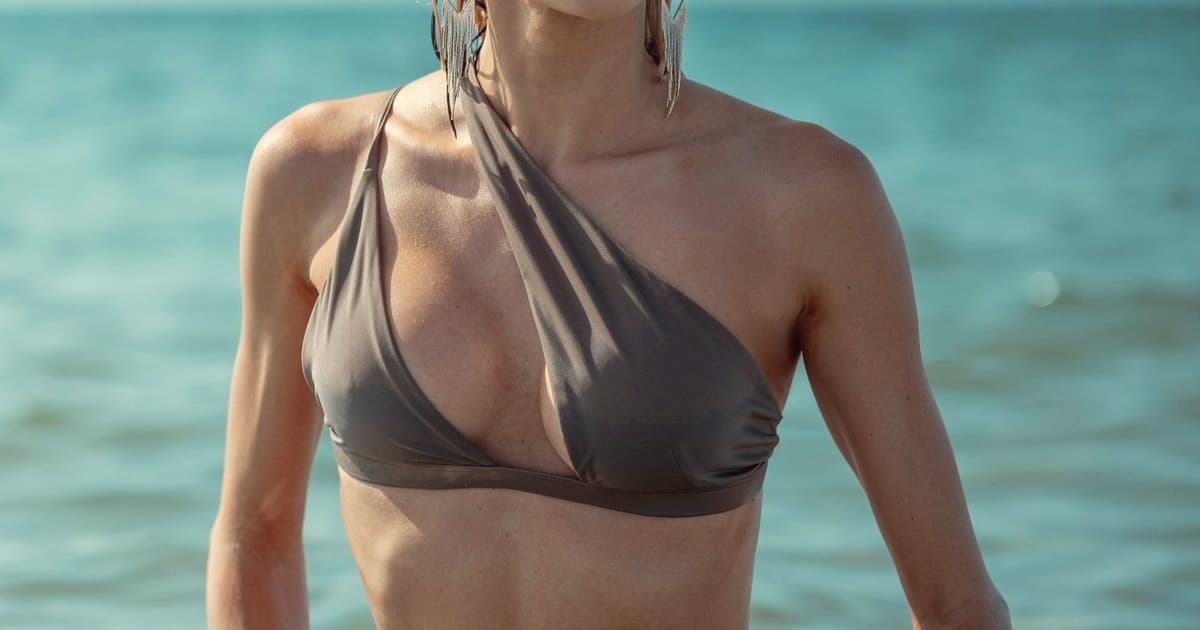
Breast implants in Turkey cost from €4,300 as an all-inclusive package — against roughly £4,500–£8,000 in the UK and $6,000–$12,000 in the United States, where the surgeon's fee alone often exceeds the entire Turkish package. That gap is why thousands of women fly to Istanbul for breast augmentation each year. But the price tag is only part of the decision: the implants used, the surgeon's credentials and the accreditation of the hospital matter far more than the number. This guide breaks down the real cost of breast implants in Turkey, what the package covers, which implants are used, and how to choose a clinic safely.
How much do breast implants cost in Turkey?
At Estetica Istanbul, breast augmentation with implants starts from €4,300 as an all-inclusive package. That covers the board-certified partner surgeon's fee, the operating theatre and one night in a JCI-accredited partner hospital, general anaesthesia, your CE-marked implants, pre-operative tests, medication, a post-surgical support bra, and five nights in a recovery hotel with airport transfers. The only cost never included is your flights. A €500 deposit secures your surgery date and the balance is settled before the operation. Everything is quoted in euros — the invoicing currency — so there are no exchange-rate surprises at the end.
All-inclusive
Breast Augmentation
from€4,300US$4,990£3,700CA$6,920A$7,010NZ$8,510
Breast implants Turkey vs UK and US: the cost comparison
In the UK, breast augmentation typically runs £4,500–£8,000 once the facility, anaesthetist and follow-up are added; across Western Europe it is roughly €6,000–€9,000; and in the United States $6,000–$12,000, or more in high-demand markets. Turkey's from-€4,300 package usually lands well below those figures while including the hotel and transfers that Western quotes treat as extras. The saving is real and structural — but an implausibly cheap quote, far under these ranges, is a warning sign rather than a bargain, because the corner being cut is usually the implant brand, the surgeon's experience or the accreditation of the facility.
Why are breast implants cheaper in Turkey?
A lower price does not mean lower quality. Turkey's cost advantage is structural: lower clinical overheads and staff costs, a favourable exchange rate, and a high volume of procedures that lets accredited hospitals run efficiently. Istanbul's leading facilities are accredited by the same international body — JCI — that accredits top Western hospitals, and the partner surgeons are board-certified specialists using the same CE-marked implant brands sold across Europe. What you are not paying for is the premium overhead of a London or Beverly Hills address.
What's included in the all-inclusive package
An Estetica Istanbul breast augmentation package is built so you arrive to a plan and leave with aftercare in place. It includes the surgeon's fee and surgical team, the JCI-accredited hospital and theatre, general anaesthesia, pre-operative blood tests and imaging, your CE-marked implants, medication, a post-surgical support bra, five nights in a recovery hotel, all airport and clinic transfers, and a patient coordinator throughout your stay. Flights are never included. Implants from premium manufacturers carry their own warranty, which your coordinator documents for you.
Choosing your implants: type, shape and placement
Modern breast implants come from a small number of trusted manufacturers — Motiva, Mentor and Allergan among them — all CE-marked and supplied with a manufacturer warranty. You will choose between round and teardrop (anatomical) shapes and between smooth and textured surfaces; most patients today receive silicone-gel implants, which feel more natural than saline. Placement is either under the muscle (submuscular) or partially under it (dual-plane), decided by your surgeon based on your tissue and goals. The right combination is a clinical decision made at consultation, not a catalogue pick — a good surgeon steers you toward a natural, proportionate result rather than the largest possible size.
What breast augmentation involves
Breast augmentation is performed under general anaesthesia and usually takes one to two hours. The surgeon makes a discreet incision — most often in the fold beneath the breast (inframammary) or around the areola — creates a pocket, and positions the implant. You stay one night in hospital for monitoring. Because the incision is planned to sit in a natural crease, scarring is designed to be inconspicuous and fades over time. If there is significant sagging, augmentation can be combined with a breast lift in one operation, which is assessed and quoted separately.
Are breast implants in Turkey safe?
Breast augmentation is one of the most established procedures in plastic surgery, but it is not risk-free and honest expectations matter. Implants are medical devices, not lifetime guarantees: many women keep them for 10–15 years or longer, but some will need a revision or replacement over their lifetime. Recognised risks include capsular contracture (hardening of scar tissue around the implant), rupture, changes in nipple sensation, and a rare association between certain textured implants and a treatable immune-system cancer known as BIA-ALCL. Safety depends far more on the surgeon's technique and the accreditation of the hospital than on the country itself. Insist on a JCI-accredited hospital, a board-certified surgeon who performs breast augmentation regularly, CE-marked implants with a warranty, and a documented consultation reviewing your medical history.
Recovery timeline: what to expect
Most patients are up and walking the same day and fly home after five to seven days, once a post-operative check clears them. Expect soreness, swelling and tightness for the first one to two weeks, managed with prescribed medication and a support bra worn day and night for four to six weeks. Desk work resumes in one to two weeks; you avoid lifting, pushing and overhead arm movements for a few weeks, and full exercise — especially chest and upper-body training — after six to eight weeks with surgeon clearance. The implants settle into a natural position over roughly three months. Flying too soon after any surgery carries a small blood-clot risk, so never book a return flight earlier than your clinic advises.
How to choose a clinic
Before paying a deposit anywhere, confirm four things: that surgery takes place in an accredited hospital rather than an unlicensed clinic, that you can see the operating surgeon's credentials and breast-augmentation experience, that the implant brand and warranty are named in writing, and that aftercare and revision policy are documented. Ask directly which implants will be used and whether they are CE-marked — a reputable provider answers without hesitation. Be sceptical of prices far below the ranges above and of reviews that are uniformly perfect.
How much do breast implants cost in Turkey?
Breast augmentation at Estetica Istanbul starts from €4,300 all-inclusive, covering surgery, CE-marked implants, a JCI-accredited hospital, anaesthesia, medication, a support bra and five recovery-hotel nights with transfers. Flights are separate, and adding a breast lift, if needed, is quoted after assessment.
Which implants are used — Motiva, Mentor or Allergan?
Estetica Istanbul's partner surgeons use CE-marked implants from established manufacturers such as Motiva, Mentor and Allergan, each supplied with a manufacturer warranty. The specific brand, shape and size are chosen with your surgeon at consultation to suit your anatomy and goals.
Do breast implants last a lifetime?
Not necessarily. Implants are durable but are not lifetime devices — many last 10–15 years or more, while some women choose or need a revision over time. Your surgeon will explain what to watch for and when a check-up is advisable.
How long do I stay in Istanbul?
Plan for five to seven days. That covers pre-operative tests, the surgery, one night in hospital and a post-operative check before you are cleared to fly. Those recovery-hotel nights are built into the package.
Thinking about breast implants in Istanbul? Request a free, no-obligation assessment and a personalised quote from Estetica Istanbul. Send a few photos and your goals, and our team will give you an honest view of your options — including which implant type and size would suit you best.
Photo by Jordan Donaldson | @jordi.d on Unsplash
Make the quote identify the implant, not just the operation
The published starting price for breast augmentation is from €4,300 all-inclusive, flights excluded, as of October 2026. Five package nights are recorded in the published package. The most useful next question is what exact proposal that starting price represents for you. Ask for the intended operation and device details in writing rather than accepting “premium breast implants” as a complete description.
Request the manufacturer and proposed model, and ask which decisions will be confirmed after examination. Do not assume every implant brand mentioned on a website is available through every partner surgeon. If a particular brand is important to you, identify the proposed surgeon and ask for confirmation through that partner's quote.
A lift, revision, or other additional procedure changes the scope of the proposal. Ask for those items to be named separately. A quote that simply says breast surgery leaves too much uncertainty about what you are paying for.
Compare the same categories across providers
Create a simple comparison sheet with the following categories: surgery, anaesthesia, facility, implant, tests, medication, garment, hotel, transport, and follow-up. Put “confirmed,” “extra,” or “unanswered” beside each. This prevents you from treating a broad package description as equivalent to a detailed written offer.
For accommodation, ask the hotel, number of nights, room arrangements, and the cost of an extra night. For transfers, ask which journeys are included and what happens if your flight changes. For follow-up, ask how appointments are arranged and which services require an additional charge.
You can use the same method for a local surgery quote without making an unsupported national price comparison. Ask your local provider for its itemised offer, keep the currencies as quoted, and record any exchange rate used with its date. Compare the complete planned cost, including travel and time away from work.
Keep four different budgets separate
The first budget is the agreed operation. It should be clear which provider is performing it and which facility and device are proposed. The second is travel: international flights are excluded, and you should allow for luggage, airport travel at home, and any companion's costs.
The third budget is comfort and optional choices. Additional Deniz hotel nights are €70 per night. Antwell is a €40-per-night upgrade above Deniz. Ask whether your companion changes the room price and whether optional extras are relevant to the proposed operation. Do not buy an extra simply because it appears in a general package menu.
The fourth budget is uncertainty: a changed itinerary, more accommodation, additional medical care, or future surgery. Ask which costs are addressed by a written policy and which remain your responsibility. This does not require predicting a complication; it requires knowing the contractual boundaries before you book.
Include future device responsibilities in the decision
An implant price is not only a purchase at the time of surgery. Ask about the records you will keep, recommended monitoring, and how to obtain advice after returning home. Ask separately about the manufacturer's warranty and the provider's policy for further treatment.
The FDA's patient information notes that implants are not lifetime devices. Its guidance is for US patients; it is not a statement about approval of a particular implant in Turkey. The practical implication for comparison is to ask about possible future costs rather than assuming the first surgery is the only expense you will ever have.
A warranty should be read by category. Does it concern the device itself, a financial contribution, or another benefit? Which eligibility conditions and documents apply? Do not turn a warranty headline into a claim that flights, accommodation, surgeon fees, or future operations are free.
Recognise the information gaps before paying
If the provider cannot yet identify the planned surgeon, device, or facility, keep those items open on your comparison sheet. Ask what must happen for them to be confirmed. A proposal may reasonably depend on examination, but the uncertainty should be explained, including whether the price can change.
Request the current deposit and cancellation terms with the written offer. Do not reuse an amount taken from an older article. Ask what happens if the clinical plan changes after you arrive and whether you can decline a proposed alternative.
Estetica Istanbul coordinates treatment with partner surgeons and facilities. For an assessment, send the requested photographs and medical form through the breast augmentation page, along with your priorities and any brand preference. Ask for a proposal you can compare item by item.
Frequently asked questions
Is the starting price a confirmed quote for me?
No. The written proposal follows assessment and should identify what your individual price covers.
Is a breast lift included in augmentation pricing?
Do not assume so. Ask for the combined procedure, if proposed, to be quoted explicitly.
What should I ask about first?
Confirm the operation, implant, surgeon, facility, package boundaries, and policy for a changed clinical plan. Those answers make the price meaningful.
Frequently Asked Questions
How much are breast implants in Turkey in pounds and dollars?
Estetica Istanbul's all-inclusive breast augmentation starts at €4,300, about £3,700 or $4,990 at 2026 rates. Invoicing is in euros; the pound and dollar figures are for reference and move with the exchange rate.
What does the €4,300 breast augmentation package include?
The surgeon's fee and team, the theatre and one night in a JCI-accredited partner hospital, general anaesthesia, pre-operative tests and imaging, CE-marked implants with manufacturer warranty, medication, a support bra, five recovery-hotel nights, transfers and a patient coordinator. Flights are never included.
How much cheaper is it than the UK or US?
Breast augmentation typically costs £4,500–£8,000 in the UK and $6,000–$12,000 in the US, before hotel and transfers. At €4,300 (about £3,700) all-inclusive, Istanbul usually lands well below those figures.
Which implant brands are used and do I choose the size?
Partner surgeons use CE-marked implants from established manufacturers such as Motiva, Mentor and Allergan. Shape, surface, size and placement are decided with your surgeon at consultation to suit your anatomy rather than picked from a catalogue.
How long do I stay and how do I book?
Plan five to seven days covering tests, surgery, one hospital night and a clearance check before flying. Send photos on WhatsApp for a free assessment; a €500 deposit (refundable within 14 days or until your flight is booked, whichever comes first; after that it becomes 12-month credit) secures your date and the balance is due before surgery, with card, bank transfer, Klarna and 3–4 month instalment plans accepted.
Get Your Free Consultation
Our partner medical team will review your case and send you a personalized treatment plan.