Gastric Sleeve Surgery in Istanbul: Complete Patient Guide
All-inclusive
Gastric Sleeve
from€3,570$4,140£3,070CA$5,750A$5,820NZ$7,070

Gastric Sleeve Surgery in Istanbul: Complete Patient Guide
Gastric sleeve surgery (sleeve gastrectomy) is one of the most popular bariatric procedures worldwide, with over 600,000 procedures performed annually. The procedure involves removing approximately 80% of the stomach, leaving a small sleeve-shaped pouch that holds significantly less food. Istanbul has emerged as a leading medical tourism destination for gastric sleeve surgery, offering board-certified bariatric surgeons, JCI-accredited hospitals, and all-inclusive packages at costs 60-70% lower than North America or Western Europe. Gastric sleeve works through multiple mechanisms: dramatically reduced stomach capacity limits food intake, hormonal changes reduce appetite and improve satiety, and metabolic improvements enhance weight loss. Understanding the complete gastric sleeve process from qualification through post-operative lifestyle changes helps patients make informed decisions.
All-inclusive
Gastric Sleeve
from€3,570$4,140£3,070CA$5,750A$5,820NZ$7,070
BMI Requirements and Patient Qualification
Gastric sleeve surgery candidates must meet specific BMI (Body Mass Index) requirements established by medical societies including ASMBS (American Society for Metabolic and Bariatric Surgery) and IFSO (International Federation for the Surgery of Obesity). Generally, gastric sleeve is appropriate for patients with BMI 35 or higher, or BMI 30-35 with weight-related medical conditions such as diabetes, hypertension, or sleep apnea. BMI is calculated as weight (kg) divided by height (m) squared. A patient weighing 100 kg with height 1.7 meters has BMI of 34.6. Turkish surgeons also consider factors beyond BMI: age (typically 18-65 years), general health status, ability to comply with post-operative diet requirements, psychological readiness, and commitment to lifestyle changes. Medical evaluation includes comprehensive blood work, imaging studies, cardiac evaluation if indicated, and psychological assessment. Patients must understand that surgery is a tool requiring lifelong dietary and exercise commitment; surgery alone cannot produce sustained weight loss without behavioral changes.
Procedure Explanation and Technique
Gastric sleeve surgery is performed laparoscopically, using small incisions and camera-guided instruments rather than large open incisions. The surgeon divides the stomach vertically, removing the lateral (outer) portion while preserving the medial (inner) portion including the pylorus and lesser curvature. The remaining stomach forms a small tube or 'sleeve' approximately the size of a banana, with capacity reduced from normal 2-3 liters to approximately 100-150 milliliters. The removed stomach tissue is extracted through one of the small incisions. The remaining stomach is secured with staples or sutures to prevent separation. The entire procedure typically requires 45-60 minutes. Laparoscopic technique offers numerous advantages: small incisions (2-5 millimeters) result in minimal scarring, reduced pain compared to open surgery, faster recovery, and lower infection risk. Modern Istanbul hospitals use advanced laparoscopic equipment and techniques that rival the best international facilities.
Cost Comparison: Istanbul vs International Markets
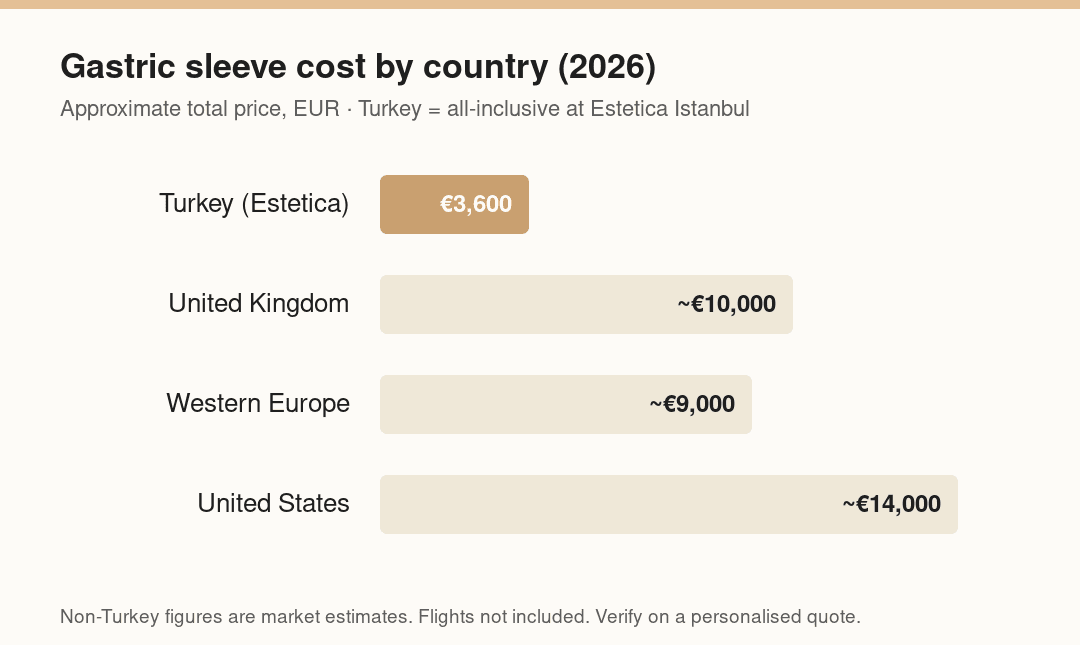
Gastric sleeve surgery costs significantly less in Istanbul than in North America or Western Europe while maintaining identical safety and quality standards. In Istanbul, all-inclusive gastric sleeve packages cost €3,570-€4,500, including surgeon fees, anesthesia, hospital facility, post-operative support, and 12 months of nutritional follow-up. The same procedure in North America typically costs €8,000-€15,000, while Western Europe charges €6,000-€10,000. Insurance coverage varies; some North American insurance plans cover bariatric surgery, while most European systems require self-pay. The extreme cost difference—60-70% savings—makes Istanbul internationally attractive for bariatric surgery. Many international patients find that cost savings alone cover airfare and accommodation, making Istanbul treatment cost-equivalent to local treatment. All-inclusive packages also include accommodation, airport transfer, and nutritionist support, further improving value. The combination of expert surgeons, JCI-accredited hospitals, and exceptional pricing makes Istanbul the leading international bariatric surgery destination.
Post-Operative Diet Stages and Nutrition
Post-operative diet progresses through specific stages to allow stomach healing while meeting nutritional needs. Week 1: Clear liquids only (water, clear broths, sugar-free drinks) prevent excess pressure on healing stomach. Weeks 2-3: Full liquids including protein shakes, yogurt, and smooth soups allow nutritional support while stomach continues healing. Weeks 4-6: Soft foods including pureed vegetables, cooked proteins, and soft fruits introduce more substantial nutrition. Weeks 6+: Regular food reintroduction with careful portion control—the new small stomach allows only 3-4 ounces per meal, about one-quarter of pre-surgery portions. High-protein, low-sugar foods support weight loss and preserve muscle mass. Hydration remains crucial; drink 2+ liters of water daily to prevent dehydration and support weight loss. Carbonated drinks, high-sugar beverages, and high-fat foods should be avoided indefinitely as they cause digestive upset and negate weight loss benefits. Nutritional supplementation with multivitamins, iron, calcium, and B12 is essential lifelong because the reduced stomach size limits nutrient absorption. Regular consultations with nutritionists guide dietary choices and optimize nutrition.
Weight Loss Expectations and Timeline
Gastric sleeve surgery produces dramatic and consistent weight loss through reduced calorie intake and metabolic changes. Average weight loss of 50-60% of excess weight occurs in the first 18-24 months post-operatively. For example, a patient 50 kg overweight typically loses 25-30 kg in the first year, with continued weight loss continuing through month 18-24. Weight loss slows after the first year but continues at a slower rate for 3-4 years. The initial rapid weight loss results from dramatically reduced calorie intake (stomach capacity of 100-150 ml allows only 600-800 calories daily initially). Metabolic improvements including increased metabolic rate and hormonal changes enhance weight loss. Body composition improves as patients lose fat while maintaining muscle through adequate protein intake and exercise. Most patients reach stable weight 24-36 months after surgery. Achieving maximum weight loss requires consistent adherence to post-operative diet, adequate protein intake, regular exercise, and ongoing behavioral support. Patients who maintain commitment achieve sustainable weight loss and often achieve normal BMI.
Long-Term Lifestyle Changes and Sustainability
Gastric sleeve surgery produces sustainable weight loss only with permanent lifestyle changes. The small stomach serves as a constant reminder to eat slowly and in small portions; attempting to eat large portions causes nausea or discomfort. Dietary habits must shift permanently toward high-protein, nutrient-dense foods rather than calorie-dense comfort foods. Regular exercise becomes essential; sedentary patients regain weight regardless of stomach capacity. Most successful long-term patients incorporate 150+ minutes of weekly activity including both cardio and resistance training. Behavioral support through support groups, counseling, or online communities helps patients navigate challenges and maintain motivation. Long-term follow-up with surgeons and nutritionists guides ongoing dietary choices and identifies nutritional deficiencies requiring supplementation. Patients must understand that weight loss is not guaranteed; non-compliance with dietary recommendations allows weight regain even with the small stomach. Success requires genuine commitment to permanent behavioral change, not temporary diet modifications.
Complications, Safety, and Long-Term Health
Gastric sleeve surgery is generally safe, with serious complication rates below 2% at accredited facilities. Short-term complications including bleeding, infection, and stomach leakage are rare (less than 1%) when performed by experienced surgeons in JCI-accredited hospitals. Long-term complications are uncommon but may include nutritional deficiencies, acid reflux, or weight regain. Nutritional deficiencies require lifelong supplementation monitoring; regular blood work ensures adequacy of protein, iron, B12, calcium, and other nutrients. Acid reflux occurs in some patients and typically responds to dietary modifications or medications. Weight regain, the most common long-term issue, results from poor dietary adherence or excessive food consumption; it can be minimized through ongoing behavioral support. Overall health outcomes are extremely positive; most patients experience resolution of diabetes, improvement in hypertension, better sleep quality, reduced joint pain, and dramatically improved quality of life. Mortality benefit from sustained weight loss significantly exceeds surgical risks. Istanbul surgeons maintain excellent safety records with complication rates among the lowest internationally. Patients should schedule comprehensive consultations with board-certified bariatric surgeons to discuss their individual risks and expected outcomes.
Related Articles

Buccal Fat Removal Cost 2026: €1,180 in Istanbul vs €2,300 in Germany, €2,600 in Italy and €4,083 in the UK
September 30, 2026

Brow Lift Cost 2026: €3,550 in Istanbul, Cheaper Than the UK, Germany and the US but Not Cheaper Than Italy
September 29, 2026

Chin Implant Cost 2026: €4,370 in Istanbul, Cheaper Than the UK and US but Not Cheaper Than Germany or Italy
September 28, 2026
Get Your Free Consultation
Our partner medical team will review your case and send you a personalized treatment plan within 24 hours.
€500 deposit, refundable for 14 days or until your flight is booked · Our guarantee