Fake Reviews in Medical Tourism: How to Spot Them and Find Real Ones
Medically reviewed by Akın İnalöz, MD, Board-Certified Plastic Surgeon· Last reviewed:
The Dark Reality of Fake Reviews in Medical Tourism
Fake reviews represent one of the most insidious and widespread problems in medical tourism. Patients desperately want authentic information from other patients, and this demand creates profit motivation for clinics to manufacture fake positive reviews. The problem is so prevalent that major surgical networks and established clinics sometimes employ review-boosting services to inflate their ratings and bury critical feedback. Fake reviews distort the entire patient decision-making process: they make mediocre clinics appear excellent, hide real patient complaints about actual problems, and ultimately lead patients to book with inferior providers. Understanding how to identify fake reviews is as important to your medical tourism success as understanding surgeon credentials or clinic accreditation. This skill protects you from making decisions based on fabricated information.
Recognizing the Patterns: How Fake Reviews Betray Themselves
Fake reviews follow predictable patterns that are distinctly different from authentic patient experiences. The first red flag is sudden review spikes—legitimate clinics accumulate reviews gradually over years. If a clinic has 8 reviews from 2024, then suddenly gets 25 reviews in January 2026, this suggests coordinated fake review activity. Authentic patient reviews are distributed naturally over time as patients recover, experience outcomes, and organically decide to share their experience. Sudden review clustering indicates purchased reviews. Examine the review timeline: do reviews appear consistently throughout months and seasons, or do they spike around specific dates? Spikes indicate coordination.
Another pattern is reviewer profile analysis. Look at reviewers' other activity: legitimate patients using Google or Trustpilot usually have review history across multiple services and businesses. Profiles that have reviewed ONLY medical clinics, and particularly profiles with reviews only for clinics in Turkey, suggest fake reviewers who've been hired specifically to boost clinic ratings. Legitimate international patient reviews come from diverse geographic locations; fake reviews often come from the same regions, suggesting they're manufactured in centralized locations.
Review content itself reveals patterns. Authentic patient reviews mention specific details: surgeon name, specific technique used, actual complications experienced, real timelines for recovery, and honest assessments of what went well and what didn't. Fake reviews use generic language: 'Great clinic!', 'Highly recommend!', 'Best experience ever!', with no specific details about procedure, surgeon, or experience. Authentic reviews often include constructive criticism: 'Results were great but communication could have been better,' or 'Excellent surgeon but wait times were long.' Fake reviews are uniformly positive with no constructive feedback whatsoever. If you read 15 reviews for a clinic and every single one is five stars with generic praise and zero criticism, you're looking at manufactured reviews.
Where to Find Verified Patient Reviews
Trustpilot has become the gold standard for verified reviews in medical tourism because it employs rigorous verification processes. Trustpilot verifies that reviewers are real people who actually used the service. While it's not impossible to game Trustpilot, it's significantly more difficult than other platforms because they actively investigate suspicious review patterns. Trustpilot also displays review verification status and alerts you when reviews appear suspicious. Google Reviews are reasonably reliable because Google employs machine-learning systems that identify and remove fake reviews. Google also requires a Google account to review, which creates accountability friction that reduces fake review volume. However, Google is less immune to manipulation than Trustpilot.
WhatClinic specializes in medical tourism reviews and has built-in verification mechanisms specific to medical procedures. Reviewers must prove they actually traveled for medical tourism and visited the clinic. This verification makes WhatClinic one of the most reliable sources for medical tourism patient feedback. RealSelf focuses on cosmetic surgery and employs strict verification—users can only review surgeons they've actually seen, and RealSelf verifies photos of actual patient results. Be cautious with clinic-hosted reviews (reviews directly on the clinic's website): these are completely unverified and clinics can remove negative reviews. Also be cautious of Facebook reviews, which are easier to manipulate and where fake profiles are common. Dedicated medical tourism review platforms are inherently more trustworthy because they have reputational incentive to maintain accuracy.
Video Testimonials: The Gold Standard
Video testimonials are significantly harder to fake than written reviews, making them far more trustworthy. When a patient agrees to appear on video, discuss their experience, show their results, and answer questions, that's authentic information. Patients would be taking enormous legal and personal risks by appearing in fake testimonials, so the existence of video content significantly increases credibility. However, even video testimonials require scrutiny. Are testimonials labeled as 'verified patient videos'? Do they appear on independent platforms like WhatClinic or YouTube, or only on the clinic's own website? Independent platform verification is more trustworthy than clinic-hosted videos.
When reviewing video testimonials, assess whether patients appear genuinely enthusiastic or scripted. Do they mention realistic recovery timelines, actual complications they experienced, and honest assessments? Authentic testimonials include constructive feedback; patients mention what the clinic did well but also honest critiques. Authentic patient videos often show before-and-after results and discuss realistic expectations. Fake testimonials are overly polished, use scripted language, avoid mentioning complications, and don't discuss realistic expectations. Ask yourself: would this video convince me if I didn't know what clinic it was promoting? If a video is so clearly promotional that you immediately recognize it as marketing material, it's less trustworthy than organic patient commentary.
The Red Flags You Cannot Ignore
Certain review patterns should completely disqualify a clinic from consideration. If a clinic has fewer than 20 reviews total across all platforms combined, there's insufficient patient feedback to make a confident decision. If a clinic has dramatically different review ratings on different platforms (five stars on their website, 2.5 stars on Google), trust the lower rating—critics tend to post negative reviews on independent platforms while clinics control their own websites. If a clinic refuses to list a specific surgeon's name with patient reviews, or claims patients are 'assigned surgeons,' this is a major red flag indicating either inexperienced surgeons or the clinic's desire to hide surgeon identity from scrutiny.
If reviews mention severe complications (infections requiring hospitalization, permanent nerve damage, unsalvageable results) that the clinic hasn't publicly addressed, be extremely cautious. Legitimate clinics publicly acknowledge rare complications and explain how they were managed; clinics that ignore or delete criticism are concealing information. If a clinic's own website displays only five-star reviews with no three or four-star reviews, those are definitely curated and likely fake—real clinics always have some mixed reviews because patient experiences genuinely vary. If negative reviews mentioning the same specific complaint appear on multiple independent platforms (e.g., 'communication was poor' mentioned on Google, WhatClinic, and Trustpilot from different reviewers), that complaint is likely legitimate. When multiple independent patients mention the same issue, it's a pattern, not an outlier. These patterns should significantly influence your decision-making.
Treat suspicious patterns as questions, not proof
A sudden cluster of reviews deserves a closer look, but it does not establish that reviews were purchased. A new patient may create an account specifically to describe treatment. Someone writing in a second language may use short, general phrases. Detailed accounts can also be fabricated. Use patterns to guide further checks rather than accusing a patient or provider on the strength of one clue.
The US Federal Trade Commission's advice on evaluating reviews recommends comparing information across sources and considering the reviewer and platform. That advice supports cautious reading; it does not provide a test that can certify an individual medical review as genuine.
Ask what stage of the experience the review describes
A review posted after booking can tell you about communication. A review from the hotel may describe transfers and early care. Neither can demonstrate a long-term surgical result. Look for the treatment date, when the account was written and whether the reviewer later updated it. Missing dates reduce what you can conclude, even when the account is authentic.
Separate four questions as you read: Was booking clear? Was consent informed? Was early recovery managed? Was the eventual outcome acceptable to that patient? One five-star rating may address only the first question. A beautiful hotel and a friendly coordinator are relevant operational details, but they are not evidence that a particular technique was appropriate.
For an operation such as breast augmentation, ask the treating specialist which result stages matter and when a fair assessment can be made. Do not borrow a hair-transplant timeline to judge a breast or facial operation.
Read the provider's response without demanding private details
A provider cannot responsibly disclose a patient's medical record simply to win an online argument. A short response inviting private contact is not, by itself, evidence of avoidance. What matters for your own booking is whether the provider explains the complaint route, escalation process and written aftercare terms when you ask.
A response that attacks the reviewer is different from a response that protects confidentiality. Save the practical questions raised by a complaint and ask them without requesting another patient's personal information. For example: “What happens if my surgeon and a local doctor disagree about a wound problem?” is more useful than demanding the full history behind an anonymous post.
Look for disclosed relationships in videos and recommendations
A real person can appear in a promotional video and still have received payment, free treatment or another benefit. Video format does not remove the need to understand that relationship. Ask whether a featured creator received compensation and whether the testimonial describes their actual treatment.
As of October 2026, the FTC's US consumer-review rule guidance addresses fake reviews and certain undisclosed insider connections. This is a US regulatory reference; it should not be presented as a universal Turkish legal rule. Its practical lesson for a reader is to check the connection between the recommendation and the business.
Before-and-after images also need context: procedure, elapsed time, comparable views and relevant differences in lighting or styling. Ask the provider to explain the images without promising you the same outcome. A testimonial is one person's experience, not a forecast for your body.
Use reviews to improve your consultation questions
Create a short list of recurring practical concerns rather than trying to calculate a medical safety score from stars. If several accounts mention unexpected fees, ask for the exclusions in writing. If communication after departure is unclear, ask which clinician evaluates concerns and how records reach a doctor at home. If people describe pressure to add procedures, ask how a changed plan is consented and priced.
Estetica Istanbul is an agency coordinating treatment with partner providers. Your patient coordinator handles operations coordination; the treating specialist answers clinical questions. Reviews should help you ask about those responsibilities, not blur them together.
Is a “verified” label enough?
Check what the platform says it verifies. A booking or purchase check does not automatically verify every clinical statement, photograph or eventual result in the review.
Should one negative review rule out a provider?
Read its context and relevance, then request specific answers. One account cannot establish a complication rate; repeated unanswered questions may still make comparison difficult.
Can I speak to a previous patient?
You can ask whether a consenting patient is available. There is no entitlement to another person's contact details, and a reference conversation still cannot replace your own clinical assessment.
Use the consultation form to request a free assessment and written treatment details. Those documents should remain useful even if every review platform disappeared tomorrow.
Get Your Free Consultation
Our partner medical team will review your case and send you a personalized treatment plan.
Your Journey. Our Hands.
From your first message to your flight home — we run the logistics. You focus on the result you came for.




Free Consultation
Send us photos and your goals on WhatsApp. We review them with the partner medical team and send a detailed, written all-inclusive quote. No payment to get your quote.
We Handle the Logistics
Once you decide, we book your hotel and VIP transfers; you book your own flight (not included) and we help you choose the right dates. Pre-op tests, hospital admission, English-speaking support — all arranged before you land.
Partner healthcare institutions
Your operation takes place inside a fully accredited hospital — dedicated anaesthesia and nursing teams, intensive care on the same floor, international safety standards. Never a back-street day-clinic.
Specialist Clinics for Smile & Hair
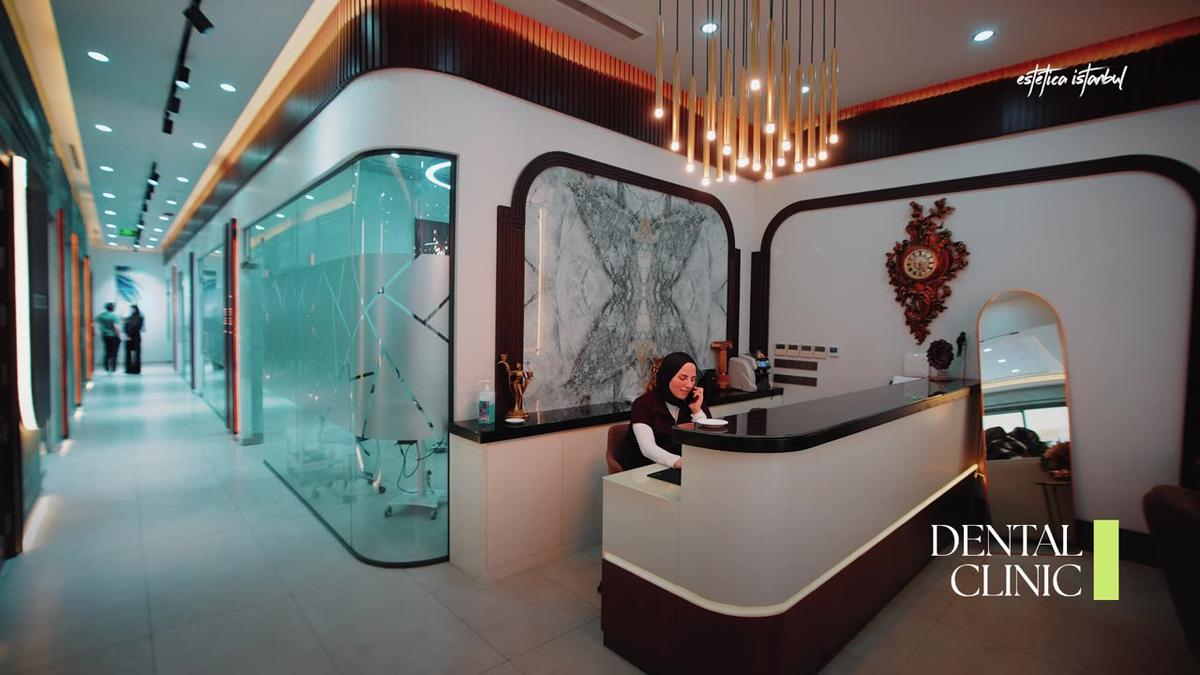
Non-surgical treatments happen at purpose-built venues — our dedicated partner dental clinic for veneers, crowns and implants, and our partner hair restoration clinic for transplants. Each run by teams who do only that, every day.
Recovery, Follow-Up & Your Smile
You recover in a hotel with on-site medical care, then fly home. We follow up remotely for a full year — and if a complication arises, we cover remote consultations with your surgeon and, in rare cases, revision surgery — with the Antwell upgrade.