Liposuction in Turkey: Cost, VASER vs Laser & Recovery (2026)
Liposuction is one of the most requested cosmetic procedures in the world, and Turkey has become the most popular place to have it. The short answer on cost: at Estetica Istanbul, liposuction starts from €2,450 as an all-inclusive package, compared with roughly £2,500–6,000 in the UK or $3,500–8,000 in the US. But price is only part of the picture. Liposuction is a body-contouring procedure, not a weight-loss method, and the result depends heavily on the surgeon's skill and your suitability. This guide explains the real cost, the difference between VASER, laser and traditional techniques, which areas can be treated, what recovery looks like, and how to choose a clinic safely.
How much does liposuction cost in Turkey?
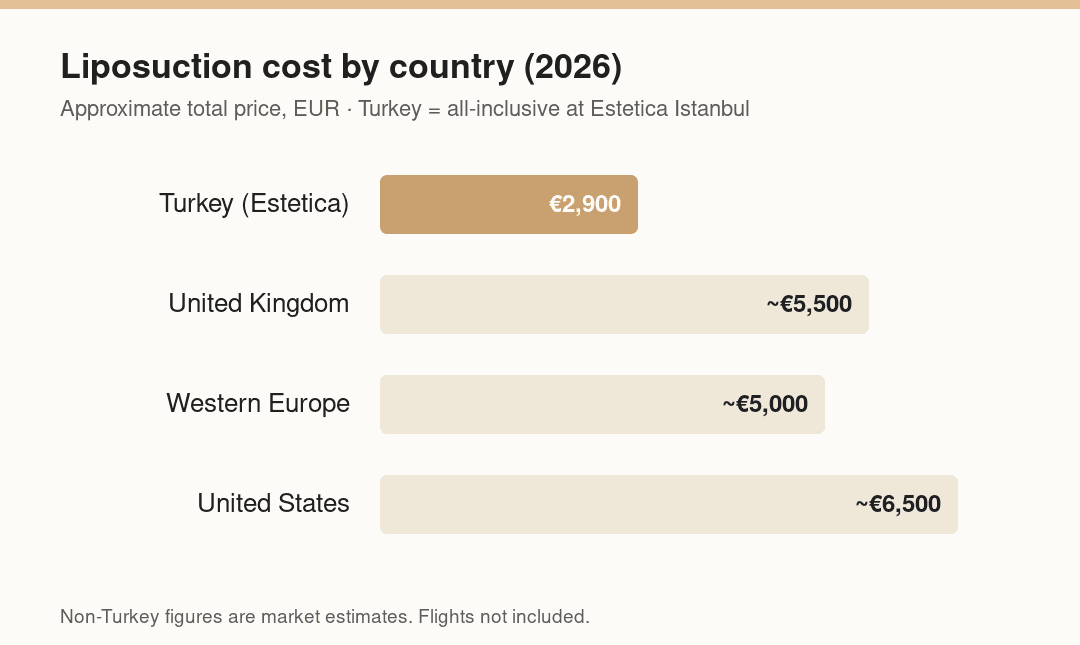
At Estetica Istanbul, liposuction starts from €2,450 as an all-inclusive package. That figure covers the surgeon's fee, the operating theatre and hospital stay in a JCI-accredited partner hospital, anaesthesia, your compression garment, post-operative medication, and recovery-hotel nights with airport transfers. Flights are never included. The final price depends on how many areas are treated and the technique used — a single area costs less than full abdominal and flank contouring. By comparison, liposuction in the UK typically runs £2,500–6,000 depending on the number of areas, and in the US $3,500–8,000. A €500 deposit secures your booking; the balance is settled before the procedure.
Why is it cheaper than the UK or US?
Lower price does not mean lower quality, and it's worth understanding why. Turkey's cost advantage comes from structural factors, not corner-cutting: lower clinical overheads and staff costs, a favourable exchange rate, and an enormous volume of medical-tourism procedures that lets hospitals operate efficiently. The surgeons performing these operations are board-certified specialists working in hospitals accredited by the same international body (JCI) that accredits leading Western hospitals. The instruments and sterilisation standards are identical. What you are not paying for is the premium overhead of a Harley Street or Beverly Hills address.
VASER, laser and traditional liposuction: what's the difference?
Three main techniques are used. Traditional (suction-assisted) liposuction removes fat through a thin cannula and remains the workhorse for larger volumes. VASER (ultrasound-assisted) liposuction uses ultrasound energy to break up fat before removal, which can be gentler on surrounding tissue and is often chosen for more defined, high-definition contouring. Laser-assisted liposuction uses heat that may help with skin tightening in smaller areas. No single technique is best for everyone — the right choice depends on the area, the volume of fat, and your skin quality, and should be decided with your surgeon rather than picked from a menu.
Which areas can be treated?
Liposuction can address stubborn fat that resists diet and exercise in the abdomen, flanks (love handles), back, thighs, knees, upper arms, chin and neck, and — in men — the chest. It is most effective on localised pockets of fat in people who are already close to a stable, healthy weight. It is not a treatment for obesity and does not remove visceral fat, the deeper fat around the organs. If loose skin is the main concern rather than fat, a skin-tightening or lifting procedure may be more appropriate, and your surgeon will tell you so honestly.
What the procedure involves
Liposuction is performed under general anaesthesia or, for small areas, local anaesthesia with sedation, and typically takes one to three hours depending on the number of areas. The surgeon makes small incisions, infiltrates a fluid solution to reduce bleeding and bruising, then removes fat through a cannula. Many cases are day-case or single-overnight. The fat removed can sometimes be purified and used for fat transfer to other areas, such as the buttocks or breasts, if this is planned in advance.
Recovery timeline: what to expect
Most patients are up and walking the same day and fly home after 2–4 days, once a post-operative check clears them. A compression garment is worn for 4–6 weeks to control swelling and help the skin retract smoothly. Bruising and swelling are normal and settle over a few weeks. Desk work is usually resumed within about a week, light activity after two to three weeks, and full exercise after roughly four to six weeks with your surgeon's clearance. The final contour becomes clear over three to six months as swelling fully resolves. As with any surgery, flying too soon carries a small blood-clot risk — never book a return flight earlier than your clinic advises.
Is liposuction in Turkey safe?
Liposuction is generally safe when performed by a qualified surgeon in an accredited facility, but it is real surgery with real risks — contour irregularities, fluid shifts when large volumes are removed, infection, and the clot risk noted above. Safety depends far more on where and with whom you have it than on the country itself. Insist on a JCI-accredited hospital, a board-certified surgeon, a documented consultation that reviews your medical history, and a written aftercare plan. Estetica Istanbul operates as a medical-tourism agency coordinating board-certified partner surgeons and JCI-accredited hospitals, so the standards match what you would expect at home. Be especially wary of clinics offering to remove very large volumes in a single session at an unusually low price.
How to choose a clinic
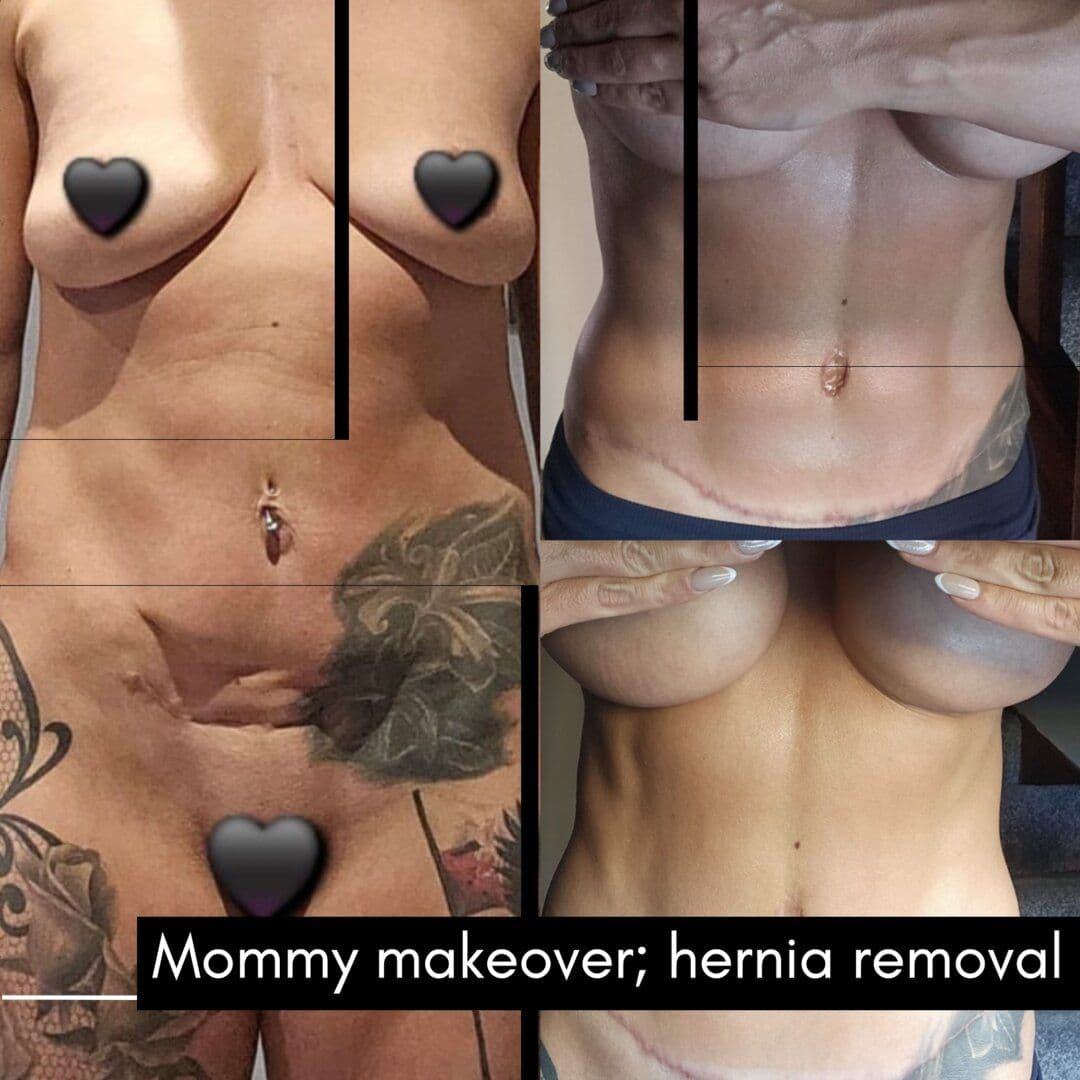
Before you pay a deposit anywhere, confirm four things: that the surgery takes place in an accredited hospital (not an unlicensed clinic), that you can see the operating surgeon's credentials, that real before-and-after photos of comparable cases are available, and that aftercare and revision policy are in writing. Be sceptical of prices that look implausibly low and of reviews that are uniformly perfect — both are red flags. A reputable provider will give you a named surgical contact and answer hard questions directly.
Will the fat come back after liposuction?
The fat cells removed during liposuction do not return. However, the fat cells that remain can still enlarge if you gain significant weight, so keeping a stable weight and a healthy lifestyle keeps your result looking its best.
Is liposuction a weight-loss procedure?
No. Liposuction reshapes specific areas by removing localised fat; it is not a treatment for obesity and not a substitute for diet and exercise. It works best for people near a stable weight with stubborn, diet-resistant pockets of fat.
How many areas can be treated in one session?
Several areas can often be treated in a single session, but surgeons limit the total volume of fat removed for safety. Your surgeon will advise during consultation what can be done safely in one operation.
How soon can I travel home?
Most patients fly home 2–4 days after surgery, following a post-operative check. Your recovery-hotel nights are built into the package for exactly this window.
Considering liposuction? Request a free, no-obligation assessment and a personalised quote from Estetica Istanbul. Share the areas you'd like to treat and a few photos, and our team will explain your options honestly — including whether liposuction, or another approach, is the right fit for you.

Get Your Free Consultation
Our medical team will review your case and send you a personalized treatment plan within 24 hours.