BMI Limits for Cosmetic Surgery Abroad: What Surgeons Accept
Medically reviewed by Akın İnalöz, MD, Board-Certified Plastic Surgeon· Last reviewed:

Every week someone sends photographs, asks for a tummy tuck price, and has already been told at home that their BMI is too high. Many assume a clinic abroad will simply say yes. Some will. The ones worth travelling to will not. BMI is the single most common reason a cosmetic surgery request is declined, and the threshold is not a judgement about how anyone looks: it is an anaesthetic, healing and clotting risk number. Here is where the real limits sit, what the evidence behind them shows, and what to do if you are above them.
The short answer
Most careful surgeons draw the line at a BMI of 30 for body surgery — tummy tuck, liposuction, BBL, mommy makeover — with limited flexibility up to about 32 after documented, stable weight loss. Facial surgery is usually acceptable up to 32, because the surgical field is smaller and the clot risk lower. Estetica Istanbul's partner surgeons work to the same thresholds a London or Milan surgeon would use, for the same reason: at BMI 30 and above, the measured rate of complications after abdominoplasty roughly doubles. If you are above the limit, the route is weight loss first, and in Istanbul that can be part of the same conversation: a gastric balloon from €2,780 or a gastric sleeve from €3,570.
BMI is a risk number, not a beauty standard
BMI is a blunt instrument. It cannot tell muscle from fat, and a lean, heavily trained body can read as overweight. Surgeons know this, which is why a proper assessment looks at body composition, fat distribution and blood work rather than one figure. But BMI stays in use because it tracks the things that actually go wrong in theatre. A thicker abdominal wall and more visceral fat make the operation longer and the closure more tension-loaded. Fatty tissue heals with a poorer blood supply, so wounds break down more often. Breathing is harder to manage under general anaesthesia. Venous clot risk rises. Those are mechanical facts, not opinions about anyone's body.
The thresholds surgeons actually use
Centre for Surgery in London publishes a procedure-by-procedure list that matches what serious surgeons across Europe apply. Tummy tuck: BMI under 30, with flexibility to 32 where more than 60 lb of weight loss has been stable for six months. Liposuction: under 30, ideally under 28, because it is a contouring operation and not a weight-loss one. BBL: under 30, with a practical floor around 22, since below that there is not enough donor fat to harvest. Breast augmentation, lift and reduction: under 30 preferred, with reductions sometimes allowed to 32 where breast volume itself inflates the number. Mommy makeover: under 30, because combining procedures multiplies risk rather than adding it. Facelift, rhinoplasty, eyelid surgery and otoplasty: generally acceptable up to 32.
What the evidence behind the number shows
An observational cohort published in Aesthetic Plastic Surgery followed 1,778 cosmetic abdominoplasty patients, 618 of them with a BMI of 30 or above. Overall 30-day complications ran at 8.9 percent in the obese group against 4.5 percent in the rest, an odds ratio of 1.79. Superficial wound infection was 2.2 times more likely and unplanned readmission 2.75 times more likely. The figure that matters most to anyone flying home afterwards: deep vein thrombosis occurred in 1.3 percent of the obese group against 0.1 percent of the others. That is the exact complication a long flight also raises. Surgery abroad is low-risk but not risk-free, and BMI is where those two risks compound.
A higher limit abroad is a warning, not a bargain
If one clinic says 35 is fine and four others say 30, the outlier has not found a better technique. It has a different selection policy, and you are the one who carries the consequences. Ask any provider that accepts you above 30 to put three things in writing: who the operating surgeon is and how many of these cases they do each year, what clot prophylaxis you will receive and for how long, and who pays if a wound breaks down after you are home. A provider that will not answer those has answered them anyway. It is also why Estetica Istanbul's partner surgeons decline cases. An agency that books everyone books revisions, and revisions destroy the reputation the business runs on.
If you are above the limit
Losing weight first buys a better result as well as a safer operation, because skin that has already retracted gives the surgeon a cleaner starting point. For most people that means ordinary weight loss over six to twelve months, with the surgeon wanting the new weight stable for about six months before operating so the result is not undone. Where the gap is larger, the bariatric route exists on its own medical criteria, not cosmetic ones: the 2022 ASMBS and IFSO guidelines recommend metabolic surgery at a BMI of 35 or above regardless of other conditions, at 30 or above with type 2 diabetes, and consideration between 30 and 34.9 once non-surgical treatment has failed. In Istanbul a gastric balloon starts at €2,780, endoscopic sleeve gastroplasty at €4,900, a gastric sleeve at €3,570 and a gastric bypass at €3,870, each as an all-inclusive package covering surgeon, hospital and hotel nights. Flights are never included. Body contouring then follows twelve to eighteen months later, once weight has settled: a tummy tuck from €3,690, a body lift from €4,720, a mommy makeover from €5,520.
Where BMI is not the deciding number
Some requests are refused for reasons that have nothing to do with weight, and some are accepted despite it. Heavy smoking is a bigger single threat to a tummy tuck flap than ten BMI points. Uncontrolled blood pressure, unmanaged diabetes, a clotting disorder or a recent cardiac event outrank BMI entirely. Conversely, a muscular patient at BMI 31 with good blood work and no other risk factors is often a better candidate than someone at 28 who smokes. Hair transplant sits outside this discussion: it is performed under local anaesthesia by technicians working with a JCI-accredited hospital on standby, and BMI is rarely the deciding factor.
What to send for an honest answer
To get a real yes or no rather than a sales answer, send your height and weight, front and side photographs, your age, any diagnosed conditions and medication, whether you smoke or vape, and details of previous surgery. Estetica Istanbul passes that to a partner surgeon and comes back with one of three answers: a named surgeon, a date and a fixed all-inclusive price; a specific target weight and a re-assessment; or a straight no with the reason. A €500 deposit holds a surgical date once a surgeon has accepted the case, never before. If a number stands between you and the operation, the useful next step is finding out exactly which number, and by how much.
A BMI number is the beginning of assessment
There is no verified single BMI limit that applies to every cosmetic procedure or every partner surgeon. Ask for the policy for the exact operation you are considering and how it relates to your medical history. A general internet cutoff cannot provide individual approval or explain why a surgeon recommends postponement.
The ASPS description of tummy tuck candidates emphasizes good health, stable weight, realistic expectations and not smoking. It does not supply a universal international BMI ceiling. Avoid converting one clinic's selection rule into a claim about what all surgeons accept.
Send measurements with context
Provide your current height and weight, when they were measured and whether weight is changing. Explain previous weight-loss treatment, pregnancy plans where relevant, previous abdominal operations and any scarring. Tell the team if photographs were taken at a different weight. The assessment should relate to your present situation.
Do not round measurements to reach a perceived cutoff. If your home and clinic measurements differ, ask how the team will resolve the difference. Honest information makes a provisional opinion more useful and reduces the chance of discovering a basic disagreement after travel.
Tell the team what outcome matters: removing loose skin, changing shape, relieving a practical concern or achieving a weight goal. Ask which of those the proposed procedure can reasonably address. A body-contouring quote should not be accepted as a treatment plan for weight management.
Ask about the risks beyond weight
The American Society of Anesthesiologists' obesity guidance explains that excess weight and associated conditions can complicate anaesthetic care. It highlights the importance of an anaesthesiologist's assessment. This is general clinical context, not evidence of a particular hospital's policy or of your individual risk level.
Ask how diagnosed sleep apnoea, diabetes, blood pressure problems, previous clots or mobility limitations affect the proposal. Include treatment and specialist records. If you use a sleep-apnoea device, ask whether to bring it and who needs its settings and records.
Ask whether the surgeon is considering the entire operation or only one component. Combining a tummy tuck with other surgery creates a different planning question from evaluating a single procedure. If the scope changes, ask for a renewed assessment and a clear explanation of alternatives.
A refusal should lead to a useful explanation
If the recommendation is to wait, ask what specific concern must change. Is the issue a measured threshold, ongoing weight change, an untreated condition or the proposed amount of surgery? Ask what evidence the team would need for reconsideration and whether another appointment is required.
Do not assume the answer is a rapid diet. Ask your own clinician about a sustainable weight-management plan appropriate to your health. If nutrition, medication or bariatric assessment is suggested, it should be treated as a separate clinical decision with its own benefits, risks and eligibility. A cosmetic consultation should not automatically become a bariatric sales offer.
Ask whether staging the work, reducing its extent or choosing no operation for now would address the concern. Get an explanation of what each option would leave unchanged. If you seek a second opinion, provide the original assessment so the next clinician understands the issue rather than starting with a price request alone.
Travel belongs in the suitability discussion
Explain the length of the return journey, your companion arrangements and any physical help you need. Ask whether the proposed stay is sufficient for the intended checks and whether a longer stay could be required. A BMI-based acceptance does not establish that a long journey immediately after the package ends is appropriate.
Consider the plan after you reach home. Who can assist with meals, dressing changes or transport to an assessment? Who will see you if a wound concern arises? Ask these questions before comparing treatment abroad with local care.
Compare total costs once suitability is established
Do not compare two prices until you know that they cover the same procedure and care plan. Ask whether additional assessment, specialist input, an extended stay or a staged second procedure would be charged separately. International flights are excluded; extra hotel nights, fare changes and home aftercare also need a budget.
Does being below a limit guarantee approval?
No approval should be inferred from the number alone. Ask for the surgeon's assessment of the full medical form.
Is a clinic with a higher cutoff automatically unsafe?
A different cutoff alone cannot answer that. Ask for its clinical reasoning, assessment process and aftercare plan; verify rather than rank care by one number.
Can I book before reaching a target?
Clarify whether any date is provisional and how reassessment affects booking terms. A future target should not be presented as present clinical clearance.
For a free initial assessment of tummy tuck options, send current measurements with your photographs and medical history.
Get Your Free Consultation
Our partner medical team will review your case and send you a personalized treatment plan.
Your Journey. Our Hands.
From your first message to your flight home — we run the logistics. You focus on the result you came for.





Free Consultation
Send us photos and your goals on WhatsApp. We review them with the partner medical team and send a detailed, written all-inclusive quote. No deposit to talk.
We Handle the Logistics
Once you decide, we book your hotel and VIP transfers; you book your own flight (not included) and we help you choose the right dates. Pre-op tests, hospital admission, English-speaking support — all arranged before you land.
Partner healthcare institutions
Your operation takes place inside a fully accredited hospital — dedicated anaesthesia and nursing teams, intensive care on the same floor, international safety standards. Never a back-street day-clinic.
Specialist Clinics for Smile & Hair
Non-surgical treatments happen at purpose-built venues — our dedicated partner dental clinic for veneers, crowns and implants, and our partner hair restoration clinic for transplants. Each run by teams who do only that, every day.
Recovery, Follow-Up & Your Smile
You recover in a hotel with on-site medical care, then fly home. We follow up remotely for a full year — and if a complication arises, we cover remote consultations with your surgeon and, in rare cases, revision surgery — with the Antwell upgrade.
Related Articles
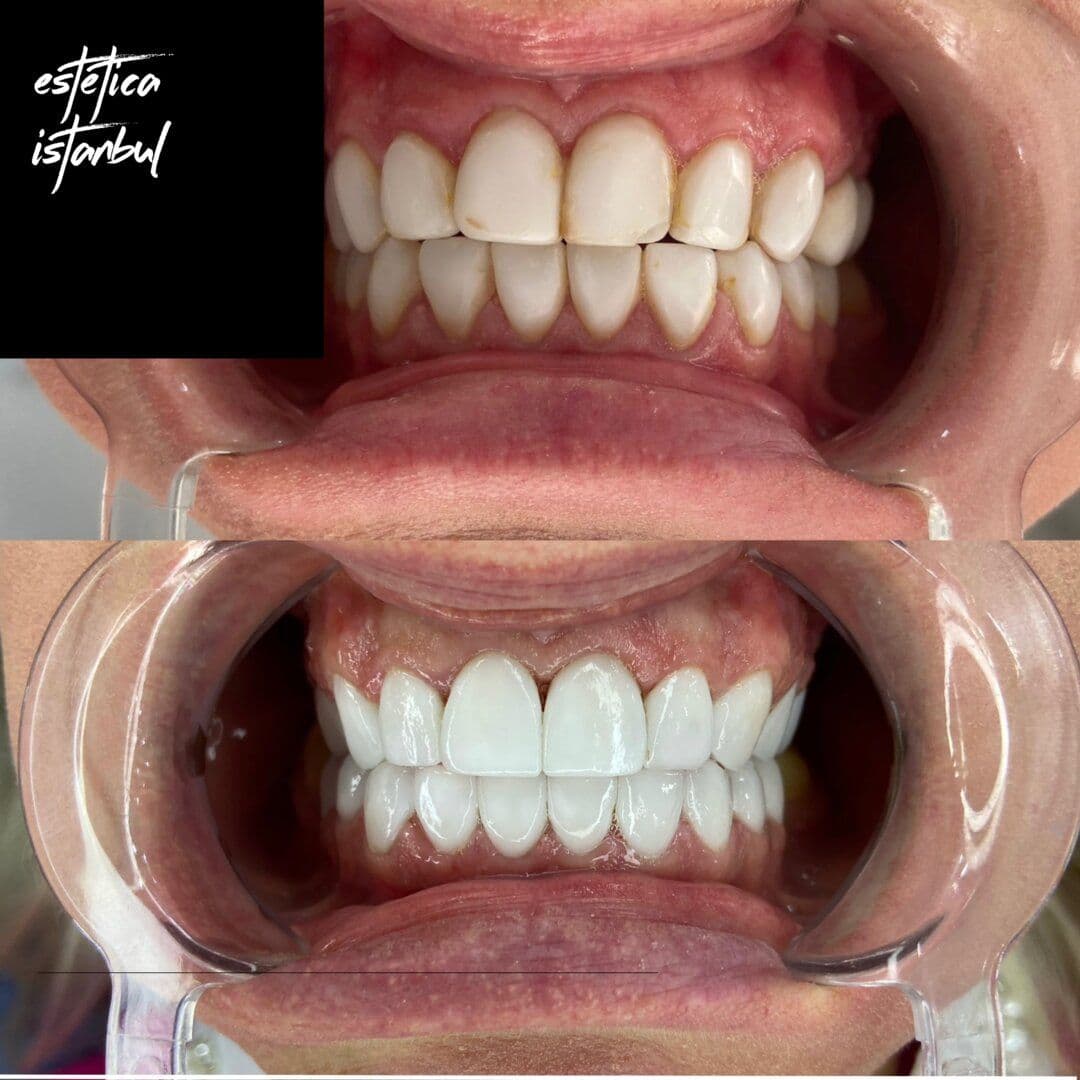
Hollywood Smile: from €3,350 in Istanbul vs €7,200+ in Rome and €8,400+ in Milan
November 6, 2026

Limb Lengthening Cost 2026: €40,100 per Stage in Istanbul vs the UK, US, Germany and Italy
October 31, 2026

Buccal Fat Removal Cost 2026: €1,180 in Istanbul vs €2,300 in Germany, €2,600 in Italy and €4,083 in the UK
September 30, 2026